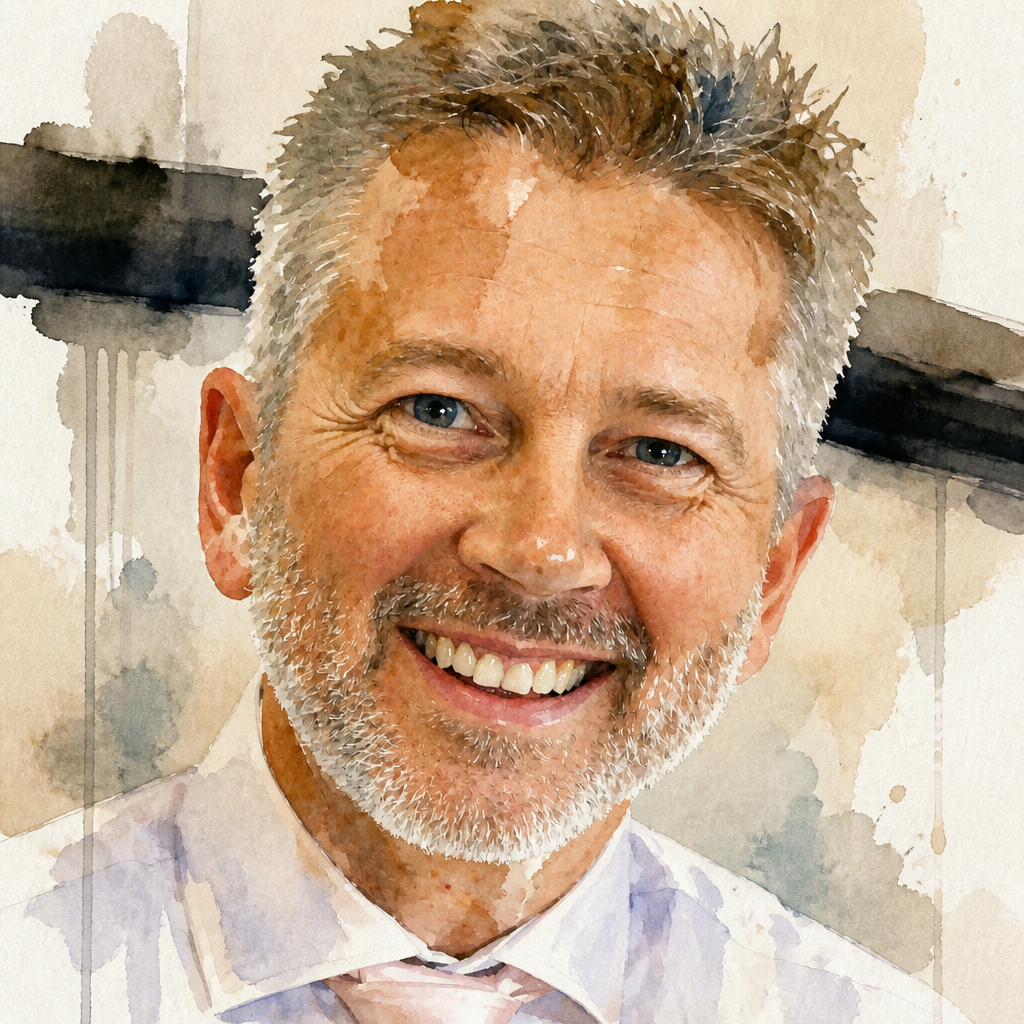
Hi, I'm Brian
I'm an Australian software engineer with more than three decades of experience building things - distributed systems, healthcare software, telecoms platforms, and cloud-scale applications. These days I spend more of my time leading and mentoring engineering teams, but I've never put down the tools; I still love being hands-on with code, even more so now that we have AI tools.
I'm also an author, though my first book has not been published yet. I've wanted to write for many years, and sensed I had a latent talent since at school, but my success was hindered by my lack of craftsmanship. I started and discarded two other books, because they simply didn't have the goods.
I have learned a lot more about writing since then, thanks to what I have gleaned from my highly educated, beautiful wife Julie Modra, a successful published author already. Now, with her help, I am seriously planning to publish this book and a few following it.
I am currently at the second draft stage with Linchpin, and that is just the start of the hard work. Finding a publisher who actually wants to publish it, after re-editing based on beta-readers' feedback, seems quite daunting at this point.
Though I'm not a Christian teacher, my writing is centred on strong Christian values, exploring themes like faith, hope and love, through the characters' journeys, while still being an entertaining, exciting read for those who want to relax with a good book.
The "painting" of me on this page is admittedly just an AI-generated "water-colour" based on a photo taken a few years ago. I'll replace it soon with similar artwork from a more recent photo. Speaking of AI, I've written down some thoughts about it - where it's heading and how we should approach it. Have a read of Drive the machine, or be driven over by it.